Inside SolarDe: Advanced Technology, Uncompromising Quality in Film Manufacturing
Finding a film manufacturer that delivers both high-end technology and consistent quality is not easy. Most suppliers promise a lot, but then fail on cleanroom standards or stable output.
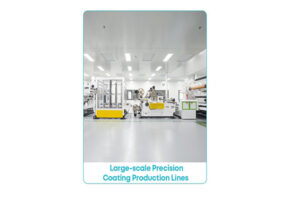
SolarDe Film Co., Ltd. runs a government-supported 60,000+ square meter factory in Yunshan Economic Development Zone. The facility includes thousand-class cleanrooms, precision coating lines, and fully automated inspection systems. This setup ensures every roll of PPF or window film meets strict ISO9001 standards.
Think about what really matters in film production. Dust ruins coatings. Temperature shifts cause uneven layers. Without tight controls, you get delamination or poor self-healing. SolarDe built its entire workflow around solving these exact problems.
A Modern Manufacturing Facility in Yunshan Economic Development Zone
Why does a thousand-class cleanroom matter for automotive film? Most buyers never see the factory floor, but that hidden space decides if your film lasts three years or ten.
A thousand-class cleanroom means fewer than 1,000 particles larger than 0.5 microns per cubic foot of air. SolarDe’s workshop spans nearly 3,000 square meters at this standard, with full temperature and humidity control. This level of cleanliness prevents embedded dust that causes bubbles or edge lifting during installation.
Three Core Facility Features That Control Quality
Feature
Specification
Why It Matters
Cleanroom class
Class 1,000
No dust contamination in coating layers
Temperature control
±1°C stability
Uniform adhesive and topcoat curing
Humidity control
45%–55% RH
Prevents static and moisture-related defects
SolarDe also installed 8K Defect Detector. These cameras scan every millimeter of film during production. If a defect appears, the detector flags it immediately. This real-time feedback stops bad batches before they roll out. The factory became a key industrial project in 2024 because of this integrated design. It is not just big. It is built for repeatable precision. Large-scale precision coating lines run alongside high-performance lines. Each line feeds into an intelligent warehousing system that stores up to 120,000 rolls across 6,000 square meters. That scale supports stable supply for global partners without sudden stockouts.
Advanced Casting and Coating Production Lines
How does SolarDe turn raw TPU into self-healing paint protection film? The answer lies in multi-layer composite technology and fully automated control systems.
SolarDe uses proprietary coating formulas and unique production processes. The factory does not rely on generic methods. Instead, it applies a multi-layer structure that includes a top coating (Self-healing™ or UV-Carved™), a TPU substrate, and a pressure-sensitive adhesive. Each layer goes through precision micro-engraving and nano-dispersion steps. Fully automated systems manage every parameter, from line speed to curing temperature.
The coating lines run at adjustable speeds between 5 and 30 meters per minute. For 7.5 mil PPF, the line uses medium speed with three-zone baking. This keeps cross-linking density consistent. The 8K Defect Detector uses high-resolution CCD cameras. AI algorithms identify bubbles, gels, and scratches down to 0.1 mm. When a defect is found, the system marks it and rejects that section during winding. The RTO (Regenerative Thermal Oxidizer) equipment captures 99% of VOCs from coating solvents. It converts them into CO2 and water vapor while recovering heat for the ovens. This lowers energy costs by about 15% compared to similar factories. The RTO also keeps the factory compliant with national green manufacturing standards.
Another key feature is the inline corona treatment. Before coating, the TPU film passes through two corona stations. This raises the surface energy from 38 to 54 dynes/cm. Higher surface energy means the coating bonds much stronger. Without this step, the topcoat could peel off over time. SolarDe also controls coating thickness with a closed-loop system. A beta gauge measures thickness in real time and adjusts the coating head automatically. The target thickness for the clear topcoat is 12 to 15 microns, with a tolerance of only ±1.5 microns. That precision is what gives the film consistent self-healing behavior across the entire roll. The factory runs a small R&D line as well. New formulas are tested there for three months before moving to full production. Accelerated aging tests (QUV, heat cycling, and salt spray) run simultaneously. No new product reaches customers without passing 500 hours of QUV exposure and 10 thermal cycles from -20°C to 80°C.
From Coating Line to Finished Product: Quality Inspection and Smart Warehousing
After the film leaves the coating line, it goes through strict quality checks before any roll is stored or shipped. SolarDe follows ISO9001 and uses advanced testing equipment from the United States. Every master roll is inspected online by 20+ cameras. Then operators take samples to test tensile strength, tear strength, and gloss. Only rolls that pass all tests move forward.
Four Quality Checkpoints
Checkpoint
Method
Standard
First sample after coating
Tensile tester, gloss meter, thickness gauge
First article must pass
Inline continuous inspection
20+ camera array + AI
No defects above 0.1mm
Re-inspection before slitting
10m sample on light table at 45°
No streaks, gels, or voids
Spot-check after slitting
5% of rolls: adhesion + visual
ISO9001, quarantine if fail
The slitting center has eight CNC machines with blade precision of ±0.5 mm. After slitting, any failed roll is traced back to the exact line, shift, and operator. The quality team meets weekly to review defect data. First-pass yield is above 97% for standard products and above 94% for custom ODM orders.
Passed rolls then enter the intelligent warehousing system. It uses automated storage and retrieval devices across 6,000 square meters, holding up to 150,000 rolls. Each pallet has a QR code with full production and quality history. The system supports FIFO, temperature-controlled shipping, and live tracking for customers. SolarDe works with multiple freight forwarders for sea, air, and express delivery, cutting average delivery time by 5 to 7 days compared to industry norms. The closed-loop quality system also ensures that any recurring defect triggers an immediate process adjustment, keeping long-term consistency high.
Comprehensive PPF Solutions and One-Stop OEM/ODM/OBM Services
Does SolarDe only make clear PPF, or can it build a full private label brand? The answer covers everything from color films to custom packaging.
SolarDe offers four main product lines: Paint Protection Film (PPF), Color PPF, Automotive Window Film, and Safety Film. The PPF product line includes ClearGard (glossy self-healing), BlackGard (QuantumBlack hydrophobic), and CarbonFiberGard (woven texture). Color PPF comes in up to 200 options, including glossy metallic and liquid metal series. Window film covers skin-care, nano heat insulation, and multi-layer magnetron types. Each line has its own spec table. For example, the BG-MAX PPF offers a 10-year warranty with 91 GU gloss and 19.49 MPa tensile strength.
For Color PPF, SolarDe uses a unique pigment-embedding process. The color is dispersed inside the TPU substrate, not just printed on top. This means even light scratches do not reveal a different base color. The color stays vibrant for years without fading. The OEM/ODM/OBM process starts with product selection. A partner picks a base film model. Then they can adjust thickness (from 6.5 to 9.5 mil), topcoat type (self-healing or hydrophobic), color, and gloss level (matte 22 GU to glossy 96 GU). SolarDe’s R&D team formulates custom materials and provides samples for testing. Tests include 500-hour QUV aging and falling sand abrasion. All data goes into a custom spec sheet for customer approval.
After approval, a small pilot batch runs within 72 hours. The customer gets sample rolls and signs off before mass production. For packaging, SolarDe prints boxes with customer logos, custom core colors, and label materials. Multilingual instruction booklets are available. The intelligent warehouse sets aside dedicated storage zones for each client to avoid mix-ups. For after-sales support, SolarDe assigns a technical manager to each OEM/ODM partner. The manager handles installation questions, complaints, and provides two on-site training sessions per year. For OBM clients (startups building their own brand from scratch), SolarDe can help with brand naming, logo design suggestions, and product line planning. That means a new brand can go from idea to finished, branded film on the market without building a factory. An established brand can outsource production and focus on marketing. SolarDe asks for one partner relationship, then delivers everything else.
Conclusion
SolarDe combines thousand-class cleanrooms, automated coating lines, smart warehousing, and full OEM/ODM/OBM flexibility to deliver reliable film manufacturing from factory to brand.
To provide the best experiences, we use technologies like cookies to store and/or access device information. Consenting to these technologies will allow us to process data such as browsing behavior or unique IDs on this site. Not consenting or withdrawing consent, may adversely affect certain features and functions.
Functional
Always active
The technical storage or access is strictly necessary for the legitimate purpose of enabling the use of a specific service explicitly requested by the subscriber or user, or for the sole purpose of carrying out the transmission of a communication over an electronic communications network.
Preferences
The technical storage or access is necessary for the legitimate purpose of storing preferences that are not requested by the subscriber or user.
Statistics
The technical storage or access that is used exclusively for statistical purposes.The technical storage or access that is used exclusively for anonymous statistical purposes. Without a subpoena, voluntary compliance on the part of your Internet Service Provider, or additional records from a third party, information stored or retrieved for this purpose alone cannot usually be used to identify you.
Marketing
The technical storage or access is required to create user profiles to send advertising, or to track the user on a website or across several websites for similar marketing purposes.