Color PPF: Change the Look, Keep the Protection
Factory paint offers a clean original look, while traditional vinyl wraps focus mainly on appearance. Color PPF combines custom styling with durable paint protection.
Color PPF combines the impact protection of clear paint protection film with integrated color and finish options. It gives a vehicle a completely new look, from matte to satin to bold hues, while blocking stone chips and UV damage.
Color PPF solves two problems at once. It delivers the personalized style of a wrap with the tough defense of a protective film. The sections below explain what it is, how it shields paint, its lifespan, and how it resists fading.
What Is Color PPF?
Many people think paint protection film only comes in clear. That limits customization for owners who want both style and safety from the same product.
Premium Color PPF is typically made from premium thermoplastic polyurethane (TPU) with color pigments embedded within the film layers.It works like traditional clear PPF, absorbing rock impacts and resisting scratches, while also changing the vehicle’s exterior hue and finish.
The Construction of Color PPF
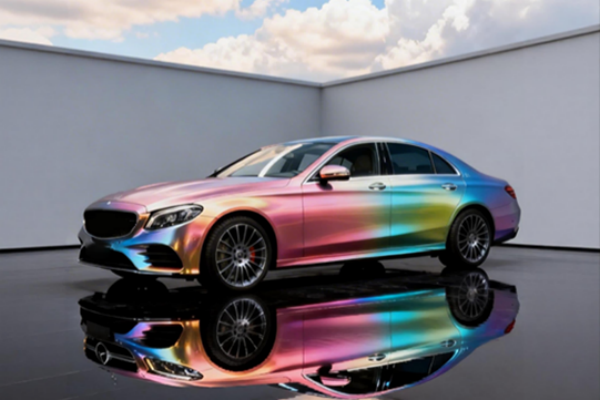
Color PPF builds on the same technology as premium clear PPF. The base remains a flexible polyurethane layer that absorbs impact energy. Above that, a color layer holds stable pigments. This color layer sits underneath a transparent top coat. The top coat provides gloss or matte texture, self-healing properties, and UV resistance. The color layer never contacts the outside air. That design keeps the pigment sealed and protected from road debris, car wash brushes, and sunlight. Because the color is inside the film, not painted on top, it does not scratch off like paint. Color PPF comes in solid shades, metallic looks, and even color-shifting effects. The available finishes range from high gloss to satin and full matte. A matte color PPF can give a car the frozen paint look without the maintenance nightmare of matte factory paint, which stains easily and cannot be polished. The film’s thickness, usually 7 to 8 mils, matches standard clear PPF. Color PPF bridges the gap between a full repaint and a traditional wrap. It offers the depth and uniformity of a quality paint job with the sacrificial protection of a film. Installation requires advanced skill because the color layer must align perfectly at seams and corners. Any misalignment becomes visible, unlike clear film. Trained technicians use precision cutting and heat shaping to achieve invisible edges. The result is a transformed vehicle that looks like it was painted that way from the factory.
How Does Color PPF Protect Your Paint?
Car owners who desire a color change often turn to vinyl wrap. Vinyl looks good for a while but provides almost no defense against gravel, door dings, or bird droppings.
Color PPF protects paint with the same multi-layer urethane construction as clear films. It absorbs stone impacts, resists scratches, and self-heals minor swirls. The color layer remains fully shielded under a durable clear top coat.
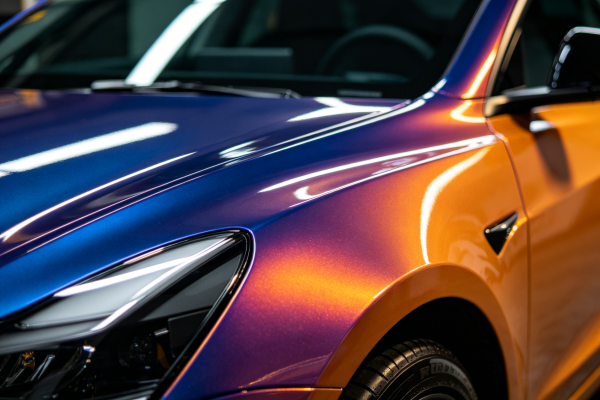
Protection Mechanism Compared to Wraps and Clear Film
Color PPF defends the factory paint through a combination of thickness, elasticity, and surface hardness. When a rock strikes the hood, the urethane layer stretches and spreads the force. The paint underneath does not fracture. A standard vinyl wrap lacks this elastic core. Vinyl is thin and brittle. It tears on impact and transfers damage to the paint. Color PPF uses the same polyurethane substrate as high-end clear films, giving it a clear advantage over vinyl in every protection metric. Stone chip resistance is high, matching that of clear PPF. Scratch self-healing works through the top coat. When light scratches appear, heat from the sun or a heat gun triggers the polymer chains to reflow and fill the marks. Vinyl cannot do this. UV protection for the underlying paint is also high because the film blocks over 99% of ultraviolet rays. The thickness sits at around 7 to 8 mils, much thicker than the 3 to 4 mils typical of vinyl wrap. Adhesive technology is another critical difference. Color PPF uses a removable acrylic adhesive designed to lift cleanly years later without leaving residue or pulling factory paint. Vinyl adhesives often harden over time and can leave a sticky mess that requires solvent to remove. Color PPF also handles chemical threats. Bird droppings and bug splatter contain acids that etch into clear coat or vinyl. The top coat on color PPF resists these stains. The film sacrifices itself to keep the original paint flawless. Removal years later reveals untouched factory paint underneath. This makes color PPF ideal for leased vehicles or anyone who wants to preserve resale value while enjoying a custom look.
How Long Does Color PPF Last?
A color change investment demands years of good looks. Cheap films fail quickly with peeling edges and chalky surfaces, making the car look worse than before.
High-quality color PPF lasts between 5 and 10 years, matching the longevity of premium clear PPF. The precise lifespan depends on film quality, installation expertise, sun exposure, and cleaning habits.
Factors That Determine Color PPF Lifespan
The expected lifespan ties directly to the materials used. Films made with pure polyurethane and stable color pigments outlast budget alternatives that use blended plastics or cheap dyes. The top coat plays a huge role. A thick clear layer with built-in UV absorbers stops sunlight from reaching the color pigments. Installation quality matters just as much. A skilled technician wraps edges fully and uses heat to set the film. Exposed edges collect dirt and start lifting. Lifted edges let moisture in and ruin the adhesive bond. After installation, maintenance shapes the film’s future. Harsh chemicals and abrasive brushes break down the top coat over time. Automatic car washes with stiff bristles create micro-scratches that dull the finish. The table below outlines how these factors shorten or extend film life.
| Factor | Shortens Lifespan | Extends Lifespan |
|---|---|---|
| Film material | Blended plastics, weak top coat | Pure polyurethane, thick clear coat |
| Installation | Exposed edges, trapped dirt | Fully wrapped edges, dust-free workshop |
| Sun exposure | Full outdoor parking without shade | Garaged or shaded parking |
| Cleaning | Strong solvents, rough cloths | pH-neutral soap, microfiber towels |
| Maintenance frequency | Neglected for months | Regular gentle washing every 2-3 weeks |
A properly installed color PPF on a garaged vehicle can look fresh for over 7 years. Even on a daily driver parked outside, a premium film retains its color and gloss through years of weather. Climate extremes also test the film. In regions with intense sun and high temperatures, the adhesive must resist softening. In cold climates, the film must stay flexible and not crack during temperature swings. Top-tier films are engineered for these conditions.
Will Color PPF Fade or Yellow Over Time?
Yellowing turns a clear bra into an eyesore. The fear that color PPF might suffer the same fate keeps many owners from committing to a full color change.
Top-tier color PPF resists yellowing and fading because the color pigments are sealed under a UV-stable clear coat. The clear top layer absorbs damaging rays before they reach the pigment. Cheap films fade because they lack this barrier.
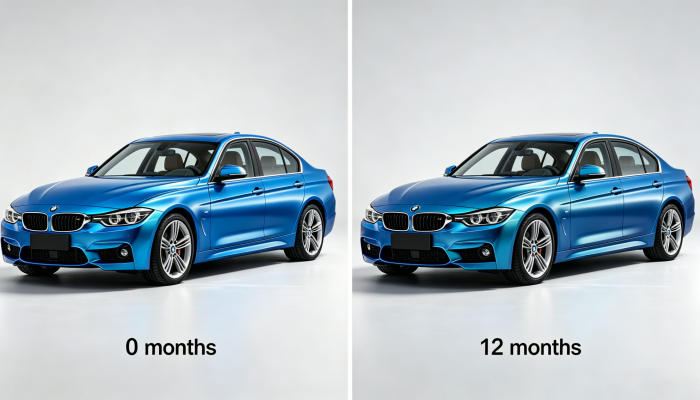
How Premium Films Prevent Color Shift
Yellowing and fading happen through two different paths. Yellowing usually affects the polymer itself. Low-grade urethane breaks down under UV radiation. The material oxidizes and takes on a brownish-yellow tint. This ruins the color accuracy of any film. Premium manufacturers use UV-stabilized polyurethane that resists this oxidation. The second path is pigment fading. In cheap color films, dyes instead of true pigments sit near the surface. Sunlight bleaches these dyes within a few years. High-end color PPF uses inorganic pigments embedded deep under a thick clear coat. The clear coat contains high concentrations of UV blockers. These blockers act like sunscreen for the color layer. Heat also threatens color stability. Some films degrade from extreme panel temperatures on dark-colored cars in summer. Advanced adhesive systems and thermally stable polymers handle this stress without delamination or color shift. A key indicator of quality is the warranty. Reputable brands offer 5 to 10 years of coverage against yellowing and fading. If a manufacturer does not stand behind color stability in writing, the film likely will not last. Light colors like white and silver can show dirt more readily but do not fade faster than dark colors. Darker films absorb more heat, which demands better material science to maintain color integrity. Color PPF also faces the test of everyday contaminants. Road salt, tree sap, and industrial fallout can settle on the surface. The self-healing top coat makes these easier to wash off without staining. Regular care with a ceramic spray coating on top of the film adds an extra layer of sacrificial protection against environmental buildup.
Conclusion
Color PPF changes a car’s look and adds real paint protection. Quality films last years without fading, making them a smart style-plus-defense choice.